

























China is no longer just the world’s factory floor.
It is fast becoming the world’s humanoid robotics powerhouse.
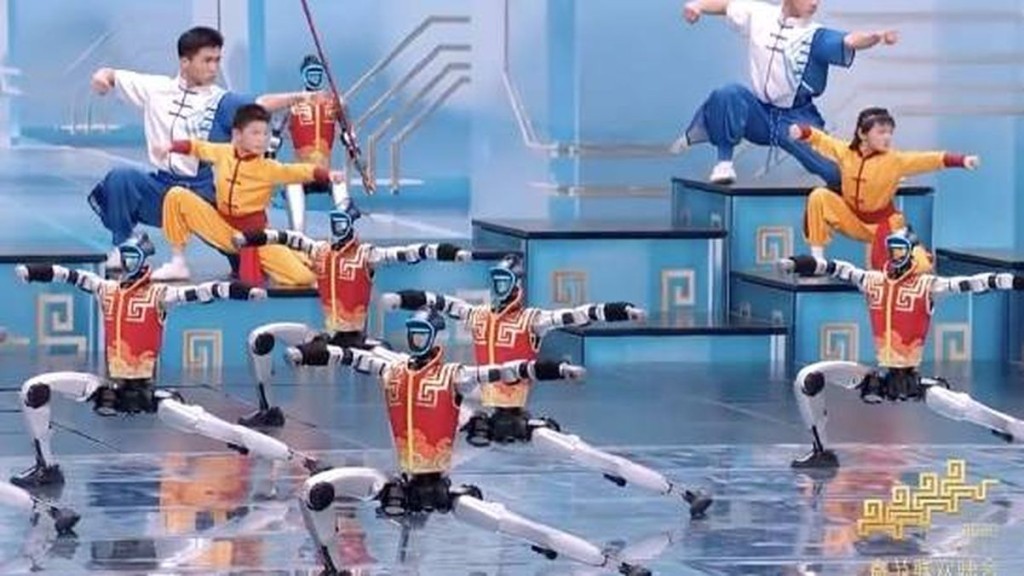
In early 2026, millions watched humanoid robots perform kung fu and synchronized dances on China’s biggest televised event — the Spring Festival Gala. What looked like entertainment was actually a global tech signal:
China is accelerating ahead in the race for AI-powered humanoid robots.
From viral robot performances to lifelike machines like Moya, the country’s robotics ecosystem is scaling faster than most Western competitors — including Tesla.
Here’s what’s really happening.
1. The Gala That Became a Robotics Showcase
During the 2026 Spring Festival Gala, humanoid robots built by Unitree Robotics performed martial arts routines and coordinated dance moves alongside human performers.
This wasn’t a prototype demo inside a lab.
This was live, national television.
The impact?
Orders reportedly surged in the days following the broadcast. What began as spectacle quickly turned into commercial demand — a powerful example of how China blends media exposure with industrial rollout.
In other words: performance → visibility → scale.
2. Unitree’s Rise and the Commercialization Strategy
Unitree Robotics, based in Hangzhou, has evolved from building robotic dogs to producing full humanoid platforms.
Unlike many Western robotics startups still focused on pilot programs, Chinese firms are pushing toward:
-
Mass manufacturing
-
Price reductions
-
Rapid iteration cycles
-
Multi-industry deployment
The goal isn’t just to build impressive robots.
It’s to industrialize humanoid robotics.
That distinction matters.
Whereas Tesla’s Optimus remains in development, China already has dozens of humanoid models entering commercial pipelines across logistics, hospitality, eldercare, and manufacturing.
3. Meet Moya: China’s Human-Like AI Robot
Shanghai-based company DroidUp recently unveiled Moya, a biomimetic humanoid designed for more natural human interaction.
Moya stands approximately 1.65 meters tall and features:
-
Highly realistic gait movement
-
Facial micro-expressions
-
Eye tracking and responsive interaction
-
AI-powered environmental awareness
The focus here isn’t just mobility.
It’s social intelligence.
China’s robotics industry is moving beyond mechanical automation into embodied AI — machines that can perceive, reason, and interact in dynamic human environments.
4. Why China Is Moving Faster Than the West
Several structural advantages explain China’s speed:
Manufacturing Infrastructure
China already dominates global industrial robot installations. Scaling humanoid production builds on existing supply chains.
Government Strategy
Robotics and AI are core pillars of national industrial policy. Strategic funding and coordinated R&D accelerate deployment.
Market Appetite
The viral impact of the Spring Festival Gala demonstrated something powerful: domestic demand is real.
Orders spike when visibility spikes.
And unlike many Western markets that debate automation ethics first, China is pushing commercialization alongside regulation.
5. The Bigger Picture: A Global AI Power Shift
Humanoid robots represent the next frontier in automation.
They are designed not for isolated factory cells, but for:
-
Warehouses
-
Retail environments
-
Public services
-
Care facilities
-
Smart cities
China’s approach combines:
-
AI software
-
Robotics hardware
-
Manufacturing scale
-
Government coordination
That ecosystem is difficult to replicate quickly.
If this momentum continues, the global humanoid robotics market may look very different within five years.
What This Means for Businesses and Tech Leaders
Whether you operate in logistics, healthcare, retail, or AI infrastructure, one thing is clear:
Humanoid robots are transitioning from concept to commercial reality.
And China is positioning itself at the center of that shift.
The real question isn’t whether humanoid robots will scale.
It’s who will control the supply chain, the data, and the standards.
Right now, China is making a strong case that it intends to lead.